Tuesday, November 22, 2011

Continuously Variable Proportional Circle Map

1.
A continuously variable proportional circle map uses circles to show the proportion of frequencies of quantities. The size of the circle depicts that. The circle size is based on actual data, not a range or average. In this example, each circle is divided up in the form of a pie chart.

Monday, November 21, 2011

LIDAR

1.   
LIDAR stands for Light Detection and Ranging. This photo of New York City shows how LIDAR uses pulses from lasers to extrapolate the measurements and data of a surface. It illuminates its targets with light. 

Doppler Radar


This Doppler Radar depicts the path of Hurricane Katrina in 2005. It uses sound waves and electromagnetic radiation to predict weather patterns such as rainfall and storm occurrences. 

Black & White Aerial Photo

1.      
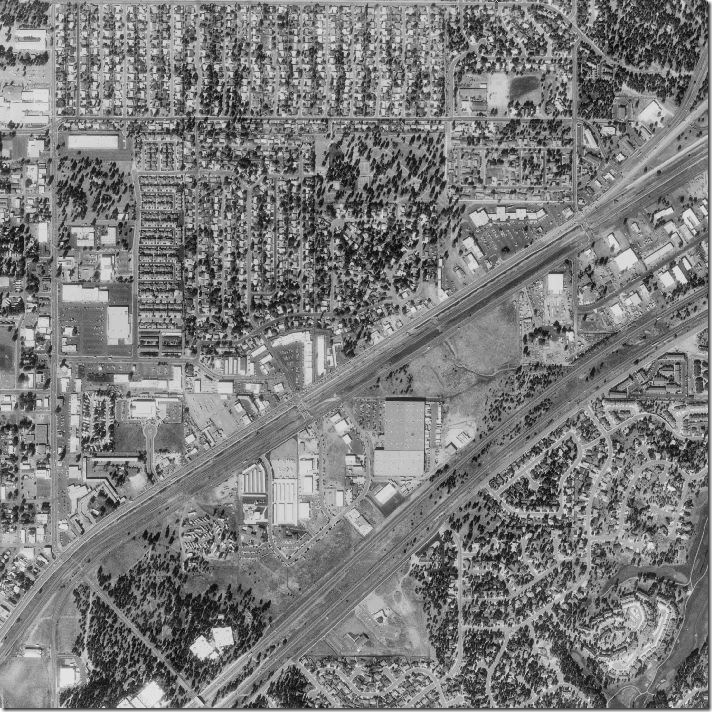
This black and white aerial photo portrays a city and within the city it shows its neighborhoods and streets. The picture is taken from the sky to show a broader view of the area. 

Infrared Aerial Photo

1.     
This infrared aerial photo shows a stadium and its surrounding environment. Infrared aerial photos show green in nature as red from a bird’s eye view. For example, grass and treetops would show up as red whereas the turf in this picture shows up black due to the fact it is made of inorganic material. 

Cartographic Animation


Cartographic animation by definition is graphic art depicted over time. This cartographic animation shows the magnitude of wind velocities around the world by month. It blends together the months to form the animation. 

Statistical Map

1.    
Statistical maps can show the average distance from one place to another as shown in this example. This map has mean travel times to work according to the National Data Book in 2006. Colors are used because states that are darker represent longer travel times.
(It has an error code embedded in the link, but if you click proceed it works perfectly fine.)

Cartogram

1.   
This is an example of a cartogram because it blurs actual boundary lines in response to the proportion of singers that originated from each continent. When looking at it, Africa seems to have the greatest number of singers that were born there. 

Flow Map


Flow maps show the distribution of people or objects from one area to another. This map depicts the trade route of France’s wine exports circa 1864. 

Isoline Map


As shown in this annual precipitation map of Washington in 1996, isoline maps have continuous lines that represent data that is continuous. Lines that touch show equal values, but the lines never touch. For example, lines that are touching on this map are areas that have equal amounts of precipitation. 

Proportional Circle Map


This proportional circle map shows Native American populations in 1990. The larger the circles, the larger the population size and vice versa.

Choropleth Map

1.     
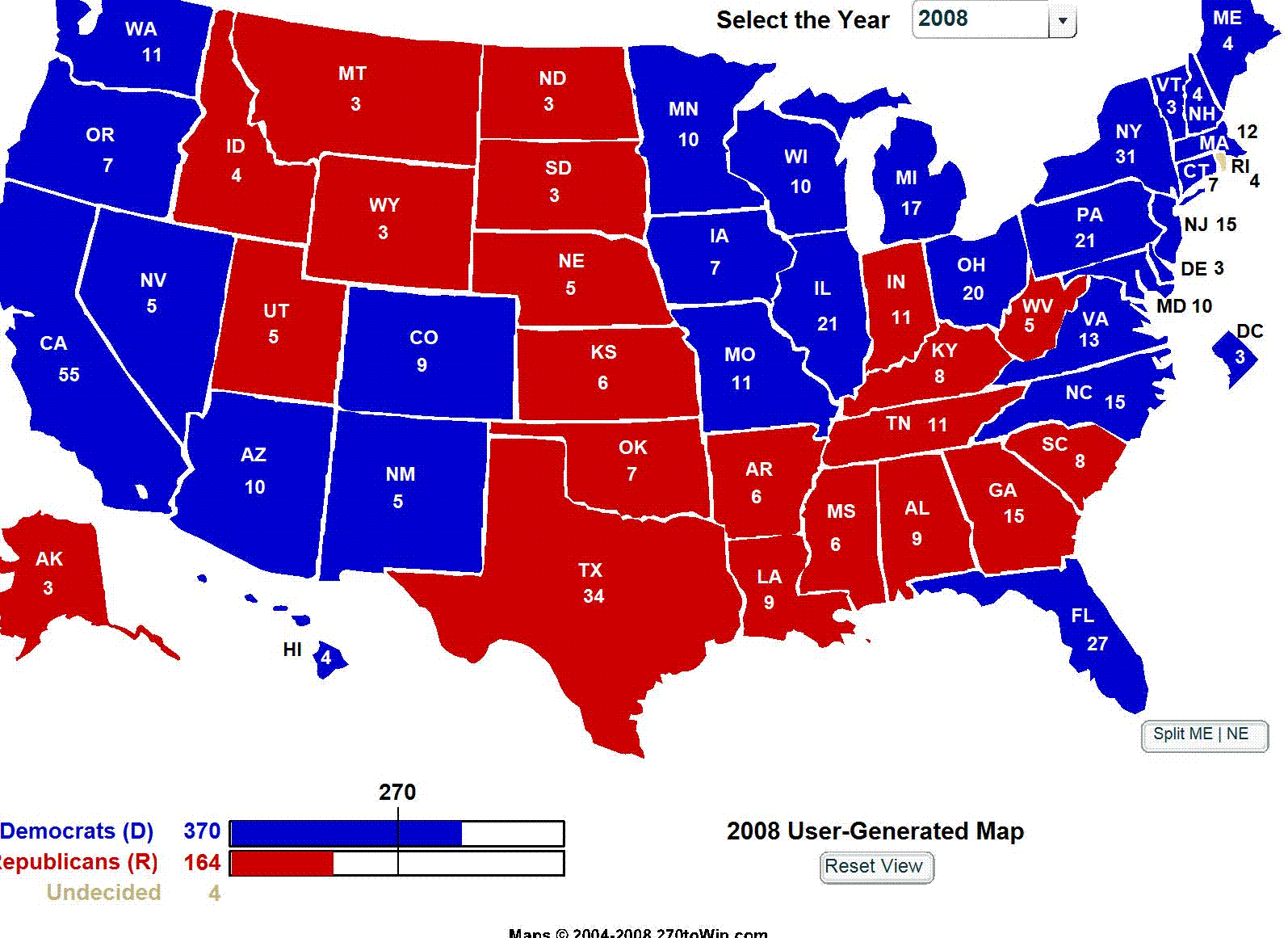
This is an example of a choropleth map because it depicts the percentage of votes cast in the United States in the 2008 presidential election and each party is represented by shades of red or blue. 

Dot Distribution Map


In my opinion, dot distribution maps are pretty much self-explanatory. They show distribution patterns of a certain population using “dots” as a means to qualify the data. This map shows the distribution of Feeder Watchers in the United States. 

Propaganda Map

1
This is an example of a propaganda that follows an old saying, “Everything is bigger in Texas!” Propaganda maps are used to persuade people and voice opinions. This map shows Texas as being the main focus of the U.S. and other states are given less than desirable nicknames. For example, Florida is labeled as “Swamp Land”. This would dissuade people from going there and instead go to Texas. 

Hypsometric Map


\

Hypsometric maps show elevation of land and sea by using different shading techniques. It has also progressed into a 3-D depiction as well. This hypsometric map shows the Aegean Sea. You can see that the deeper the water, the darker the blue is used. Also, as the elevation above water increases, the whiter that area is. 

PLSS Map

1.       

This is an example of a Public Land Survey System map. It is a hybrid of a cadastral map as well due to its coloring and depiction of land parcel ownership. The PLSS map distinguishes between public land and land owned by the government. This map is from Minnesota and is sorted by county codes. 

Cadastral Map

http://www.dalisproject.org/(S(uizyv545cvslhb55xctkmvqc))/pages/findMapsheet.aspx
This cadastral map shows ownership of land parcels in Delaware County. Cadastral maps are generally organized by color in terms of ownership. 

Thematic Map

This is an example of a thematic map that shows the population densities in Florida of the percentage of households that have someone 65 years or older living in them. This map uses counties to dictate the perimeters but thematic maps can use cities, neighborhoods, etc. The information depicted in a thematic map can be either quantitative or qualitative. 

Topographic Map

1. 

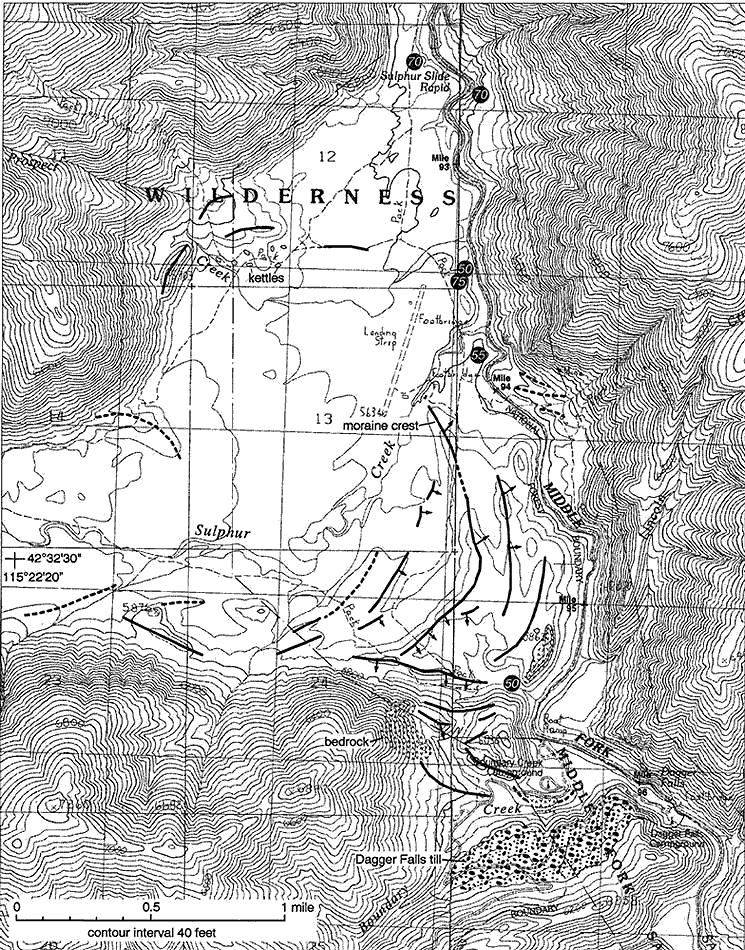
This is an example of a topographic map of the Salmon River. It has visible contour lines that indicate elevation. It shows that the river and creeks are in a valley surrounded by areas of high elevation on all sides.

Planimetric Map

1.   
This is an example of a planimetric map because it only focuses in on the horizontal aspects of the area. There are no vertical markers for elevation. It depicts Fort Vancouver in 1944. 

Mental Map

http://www.fedstats.gov/kids/mapstats/concepts_mentalmaps.html


This is an example of a mental map of Nottingham City Center. Mental maps are capable of being completely different from person to person. The person who creates the map can focus on things that someone else might not have. The scale could also be off from one person to the next. In this map, the person was able to recall street curvature and names. 

Univariate Choropleth Map

1.       
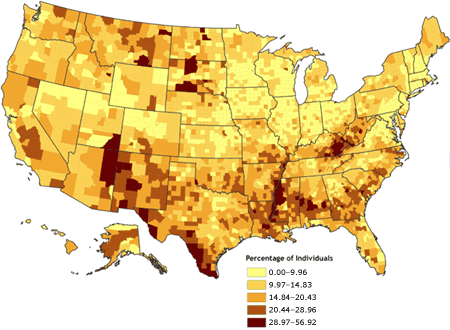
These maps are similar to the bivariate choropleth maps except only depict one variable. This example represents the percentage of individuals living in poverty in 2000.

Unclassed Choropleth Map

1.    
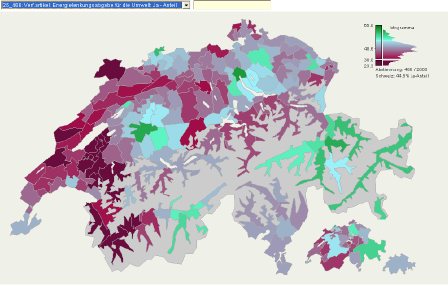
Unclassed choropleth maps are a unique method that uses continuous color schemes and shading. This map shows the color scheme and the related values. 

Bivariate Choropleth Map

1.       
These maps show two separate variables in response to one specific issue. Different colors are used to shade the difference between the variables. This bivariate choropleth maps shows Russia’s population density in 2002 versus 1989 and Russia’s central federal district. 

Classed Choropleth Map

1.       
Classed choropleth maps provide visualizations of how a measurement can change across a given area. The proportions and measurements are shown by different levels of shading. This map shows the amount of spending by overseas residents in the year 2003. 

Range Graded Proportional Circle Map

1.      
This type of map uses circles to group the data into circles. Circles are easily scaled and measured using the radius. This map has the population of Europe by country. This bigger the circles are on the map, the larger the population.

DOQQ


DOQQ stands for digital orthophotos quadrangle. It is a computerized image of an aerial photo. This photo was made by the USGS and is what is known as a natural colored picture. 

DEM

1.  
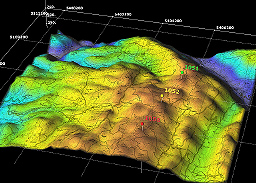
DEM stands for digital elevation model and is an image that represents elevation on Earth’s surface and is in turn made into digital representations and 3-D images. This example represents the 3D graphics and the multilayer map that uses transparencies to represent the important characteristics. 

DLG


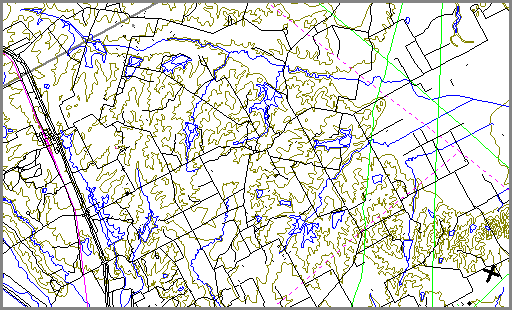
DLG, or digital line graph, represents digital vector data. It uses contour lines to represents a multitude of data. They exist in three scales which are small, intermediate, and large. This is a picture of transportation routes and natural boundaries. 

DRG


DRG, or digital raster graphic, is a scanned copy of a USGS topographical map. They account for all geographical markers on the Earth. This is an image of the Colorado River running through a Colorado town.

Isopleth

1.\
Isopleths are made up of contour lines that generalize data. This map depicts the wind velocity and latitude averaged over several years by month. 

Isopach


Isopach maps are used to show meteorological information that is related to geology. For example, this isopach shows the thickness in meters of Tioga Bentonite. Tioga Bentonite originates as volcanic ash so having this information could let someone know which areas were hit more heavily by the ash of a volcanic disruption. 

Isohyet

1. 
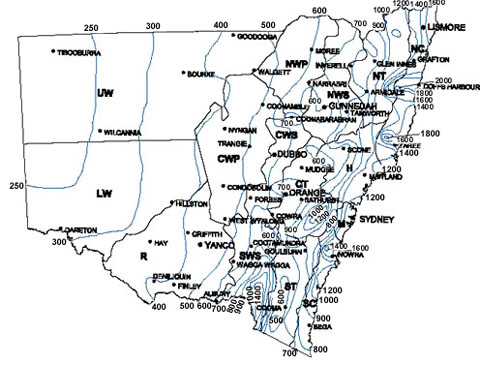
An Isohyet is a line drawn on a weather map to indicate which areas received an equal amount of rainfall during a set time period. The line itself connects two points and segments that area as shown in this map. 

Isotach

1
Isotachs are generally used in meteorology and show wind speeds. When lines connect, as they do in this map, it means that the wind speeds are equal or close. The lines that are closer together are more intense. 

Isobar

1.
This isobar map shows the atmospheric pressure in the U.S.  The map shows us that in the East there will be a rapid change in pressure due to the closeness of the bars.

Sunday, October 23, 2011

Stem and Leaf Plot

Stem and Leaf plots give quick representations of data and the distribution, shape, and density of that data. This plot shows the ages of family members attending a family reunion. For example, the youngest age recorded was 1 year old and the oldest age recorded was 81 years old. 


Box Plot

A box plot graphs data into 5 summaries. These are: the smallest observation, lower quartile (Q1), median (Q2), upper quartile (Q3), and largest observation. The three quartiles are distinguishable by their box and the end points represent either the smallest or largest observation.


Histogram

http://tstahley.wikispaces.com/Math+Dictionary
Histograms are mainly used to show the distribution of data. Variables are arranged on an x-axis and a y-axis. This example shows the number of employees a business has and the average salary the employees make. You can interpret the graph by saying that the more employees a company has, the less money on average a given employee makes compared to companies of smaller size.


Parallel Coordinate Graph


http://andrewgelman.com/2007/10/parallel_coordi/
These graphs display a group of lines that contain a set of points and are separated by equally-spaced vertical lines. This example is from Alfred Inselberg. He was the one who proposed that this type of coordinate system could be used in visual data mining, air traffic control, and interactive models of other systems.


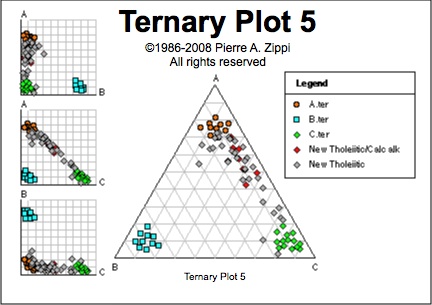
Triangular Plot

Triangular plots show ratios of three different variables and they all are positioned on a equilateral triangle. This example is plotted in three bivariate cross plots where means and standard deviations are calculated.

Windrose

A windrose is used to graph the weather conditions, wind speed, and direction of a certain location. This one shows a relatively strong easterly wind. The different colored bands represent the wind ranges.


Climograph

These graphs are used to show the climate and precipitation of a certain area. This particular climograph shows temperature and precipitation levels in Guam over a given year. The precipitation levels were generally varied and the temperature remained around the same throughout the year.


Population Profile


http://camellia.shc.edu/literacy/tablesversion/assignments/statisticsassign.htm
A population profile like this one is used to describe a population in a specific area. For example, this map is from Mobile County and describes the population growth. The darker blue stands for males and the lighter blue for females.The average age of the population is around 40-44 years old.

Scatterplot

Scatterplots plot points between two axes and are used to extrapolate data from two or more variables. They also show the relationship between the variables and how one would be affected by the other(s). That relationship is called correlation. This scatterplot shows the correlation between height and weight.

Index Value Plot


http://www.epa.gov/air/data/help/hmonaqi.html
Index value plots show an index of values instead of definitive measurements. This index value plot is measuring the quality of air based on the amount of pollutants in it.

Saturday, October 22, 2011

Accumulated Line Graph or Lorenz Curve


http://www.unc.edu/depts/econ/byrns_web/Economicae/Figures/Lorenz.htm
An accumulative line graph, otherwise known as a Lorenz curve, is a graph that depicts a degree of inequality between two distributions. The value that is measured to find the level of inequality is the slope.  The Lorenz Curve combines the data from both categories so it is a good and accurate measurement of determining whether or not the graph is increasing or decreasing. 


Bilateral Graph

These graphs compare at least two different variables side to side. It is very similar to a bar graph. The x-axis in this graph represents fiscal years and the y-axis represents the number of people. The data being measured is the acceptance of trainees, the dispatch of experts, and the dispatch of JOCVs.

Nominal Area Choropleth Map


http://geoportal.icimod.org/TrainingandEducation/GISforBeginners/p1ch8/
These types of maps show quantitative differences for variables. The nominal data is used to display the information. This type of map uses properties that are constant in order to avoid errors. 

Unstandardized Choropleth Map

This is an example of an unstandardized choropleth map because it uses raw values for the data. It represents fertility rates in the world from 2000-2005. The darker areas account for areas of higher fertility rates and vice versa. 

Standardized Choropleth Map

1.      
These maps are used to compare the distribution throughout an area. This map is of Canada and shows the population of 14 year olds and younger throughout the country. Darker shading represents a higher concentration of that younger generation and lighter shading represents older generations.