Tuesday, November 22, 2011

Continuously Variable Proportional Circle Map

1.
A continuously variable proportional circle map uses circles to show the proportion of frequencies of quantities. The size of the circle depicts that. The circle size is based on actual data, not a range or average. In this example, each circle is divided up in the form of a pie chart.

Monday, November 21, 2011

LIDAR

1.   
LIDAR stands for Light Detection and Ranging. This photo of New York City shows how LIDAR uses pulses from lasers to extrapolate the measurements and data of a surface. It illuminates its targets with light. 

Doppler Radar


This Doppler Radar depicts the path of Hurricane Katrina in 2005. It uses sound waves and electromagnetic radiation to predict weather patterns such as rainfall and storm occurrences. 

Black & White Aerial Photo

1.      
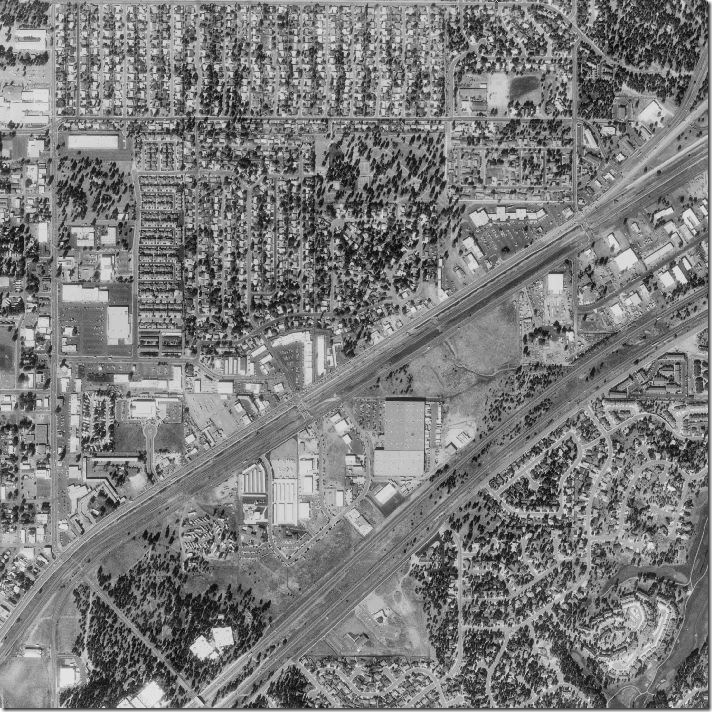
This black and white aerial photo portrays a city and within the city it shows its neighborhoods and streets. The picture is taken from the sky to show a broader view of the area. 

Infrared Aerial Photo

1.     
This infrared aerial photo shows a stadium and its surrounding environment. Infrared aerial photos show green in nature as red from a bird’s eye view. For example, grass and treetops would show up as red whereas the turf in this picture shows up black due to the fact it is made of inorganic material. 

Cartographic Animation


Cartographic animation by definition is graphic art depicted over time. This cartographic animation shows the magnitude of wind velocities around the world by month. It blends together the months to form the animation. 

Statistical Map

1.    
Statistical maps can show the average distance from one place to another as shown in this example. This map has mean travel times to work according to the National Data Book in 2006. Colors are used because states that are darker represent longer travel times.
(It has an error code embedded in the link, but if you click proceed it works perfectly fine.)